
Logistics and tank container transport: beyond the crisis
11 January 2022
How to transport food in Europe
31 January 2022
Within the framework of the Italian intermodal system, Verona certainly assumes a relevant and leading position. Indeed, in recent years the Verona freight terminal has confirmed that it is on par with (and even superior to) other major European terminals. Often overlooked in Italy, at least until the spread of the pandemic, transport in Verona has progressively taken on greater importance, and not only in the context of intermodal logistics infrastructure.
Placed at the intersection of the Brenner (north-south) and Serenissima (west-east) motorways, as well as at the crossroads of the corresponding railway lines, the Europe Quadrant Freight Terminal of Verona covers 2,500,000 square metres, with expansion planned to 4.2 million square metres. This infrastructure system is directly connected to the airport of Verona-Villafranca.
Why Verona transport is so important
First in Italy in terms of combined traffic volumes, the Freight Terminal of Verona (and more generally the Verona international transport system) has been recognised as one of the best terminals in Europe. A large majority of goods arriving and departing from Italy to Europe passes through this junction. It is an ideal meeting point for road, rail and air freight transport, both national and international. In particular, it deals with international freight traffic coming from or going to central-northern Europe via the Brenner Pass, traffic to and from France and Spain and towards the Eastern European countrie
More than seven million tonnes of goods pass through by rail and another 20 million tonnes by road annually. In the future, the Freight Terminal will also connect with the Milan-Cremona-Mantova-Legnago-Rovigo-Po di Levante waterway. The Europe Quadrant is an organic, integrated system of logistics services flanked by intermodality (swap bodies, semi-trailers, containers). The Europe Quadrant interconnects the different modes of transport (rail, road, air), concentrates traffic flows, provides access to European transport corridors and offers operators data, voice and image services as well as access to international databases.
Transport Verona: how to manage a shipment
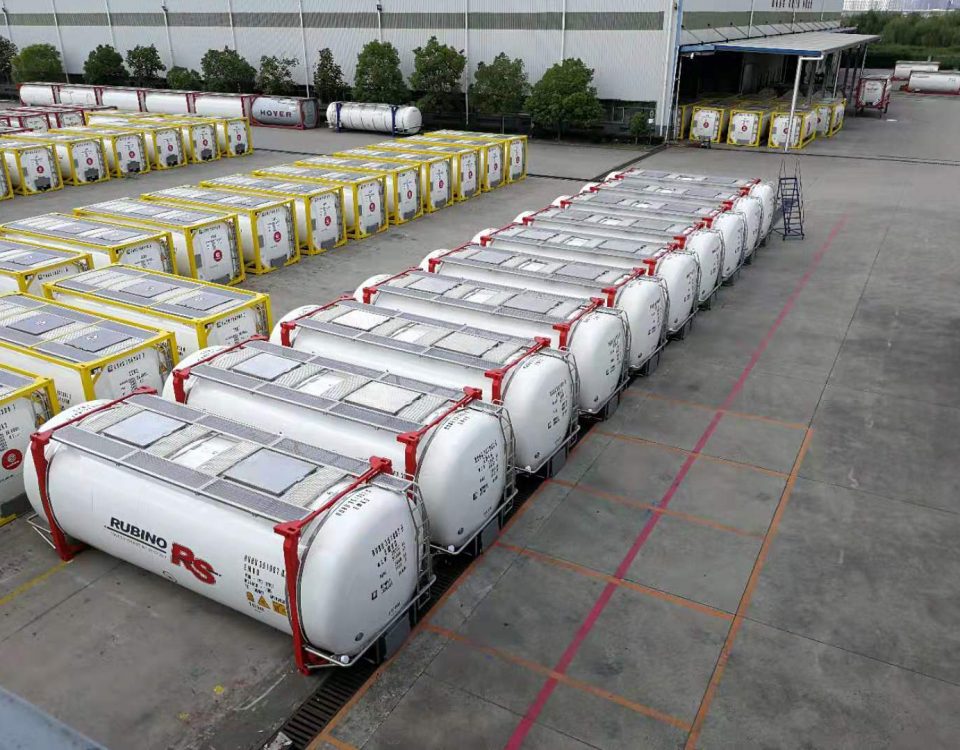
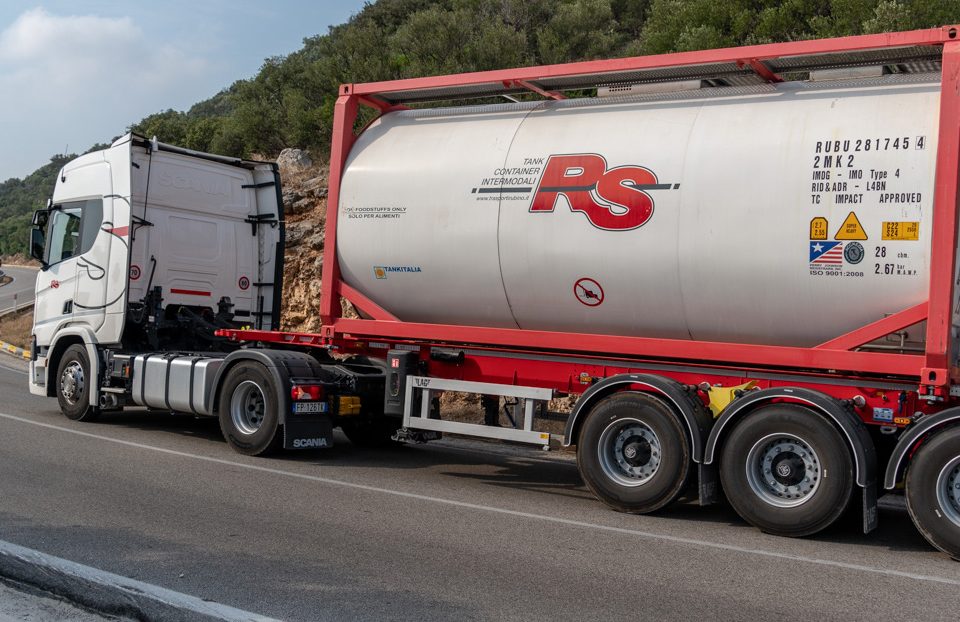
In the Covid-19 era, managing and organising shipping through the Verona Freight Terminal includes particularly delicate aspects: it requires planning, knowledge, availability and flexibility. Rubino Rs has developed an ideal organisation over the years based on the availability of 200 single-compartment tank containers of 28,000-32,000-34,500-35,000 litres that can transport all food and non-food liquids (guaranteeing a clear distinction between the two categories), also in ATP regime, which can be heated and pressurised and allow ground control (unloading-loading from below), the availability of about 40 road tanks with a capacity of 35,500 litres in four compartments equipped with auxiliary heating, pressurisable, fixed washing system, the real-time and entirely autonomous tracking service on all vehicles (Trucks – Semi-trailers – Containers and Tank Containers) using a satellite system and route control with the possibility of sounding alarms for signal interruption. (Anti-jamming system).
All this, of course, by focusing on intermodal transport, both from the point of view of speeding up times and from that of eco-sustainability.
Road haulage in Verona, to and from Europe: secure solutions
In addition to the tracking service mentioned above, the shipment of food and non-food liquids to and from Europe via the Verona Freight Terminal is also clearly characterised by the complexity of the order itself. As has already been suggested on other occasions, intermodal transport avoids cargo breakage (a major risk to product quality and cargo loss). Rubino Rs also provides customised insurance coverage for the transported goods according to customer requirements. Issued by leading insurance companies, the policies cover up to the maximum guarantee of non-delivery for all causes. The company certifications also guarantee the transport of goods in many different ways. Above all, there is a clear distinction between containers used for the transport of food liquids and those used for non-food liquids.

Follow us on LINKEDIN